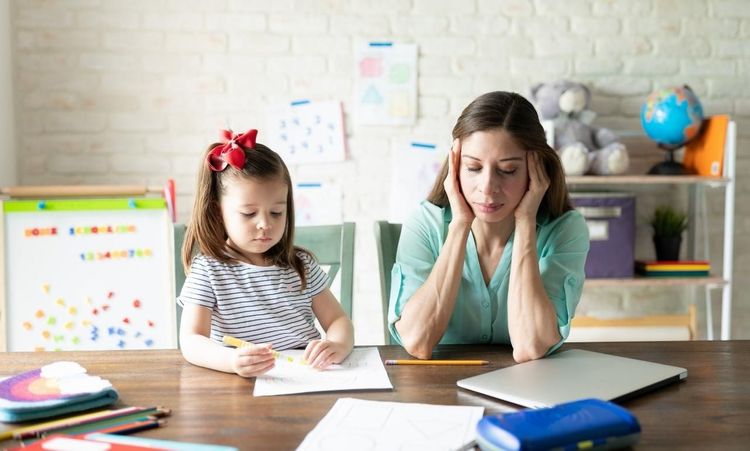
A classroom can contain knowledgeable, prepared students and still remain remarkably quiet. Participation depends on more than whether learners know the answer or have completed the reading. The physical setting, teaching methods, peer relationships, expectations, and perceived consequences of speaking can all determine whether students contribute openly or remain observers.
Participation Is More Than Raising a Hand
Classroom participation is often judged by visible behaviors. Students answer questions, volunteer ideas, join discussions, or present their work.
That captures only part of engagement.
A student may be listening carefully, taking detailed notes, solving problems independently, and thinking deeply without speaking frequently. Another may contribute often without engaging substantially with the material.
This distinction matters because classrooms can unintentionally reward one personality or communication style.
Extroverted students may respond quickly, while reflective learners prefer additional time to organize an answer. Students communicating in a second language may understand the material but need longer to formulate a response.
Effective participation therefore includes multiple ways of engaging. Discussion remains valuable, but written responses, small-group work, problem solving, peer explanation, and structured activities can reveal understanding that whole-class conversation sometimes misses.
Seating Arrangements Change the Social Environment
Furniture appears unrelated to academic confidence until students are asked to speak.
Traditional rows direct attention toward the instructor and can work well for lectures or independent tasks. They may make peer discussion less natural because students primarily see the backs of other students' heads.
Circles and semicircles make classmates more visible, potentially supporting discussion. Small clusters can facilitate collaborative work but may introduce distractions when the lesson requires sustained individual concentration.
No seating arrangement is universally superior.
The appropriate layout depends on what students are expected to do.
Physical accessibility matters as well. Students should be able to see instructional materials, hear clearly, enter and leave appropriate spaces, and participate without unnecessary physical barriers.
Even distance from the teacher can affect interaction. Students seated farther away may find it easier to remain anonymous, particularly in large classrooms.
The room quietly communicates whether learning is primarily something students receive or something they are expected to help create.
Teacher Reactions Determine Whether Speaking Feels Safe
Students quickly learn what happens when someone gives an incorrect answer.
If mistakes are met with ridicule, visible frustration, or immediate dismissal, participation can become socially risky. Even students who know an answer may hesitate if they fear being publicly wrong.
Constructive responses produce a different environment.
A teacher can acknowledge useful reasoning within an imperfect answer, ask a follow-up question, invite another student to build on the idea, or clarify the misconception without embarrassing the speaker.
This does not mean pretending every answer is correct.
Academic feedback still needs accuracy. The difference lies in separating correction from humiliation.
Students are more willing to expose incomplete understanding when they believe doing so is part of learning rather than evidence that they do not belong.
Over time, teacher reactions establish an informal risk level for participation. Every classroom develops one, whether intentionally or not.
Peer Dynamics Can Silence Capable Students
Students do not speak only to the teacher. They speak in front of an audience of classmates whose reactions may matter greatly.
A student may worry about sounding overly eager, giving an obvious answer, mispronouncing a word, or being challenged by peers. Adolescents in particular can be highly aware of social evaluation, although similar dynamics occur at other ages.
Dominant students can also shape discussion unintentionally.
If the same few people answer every question immediately, classmates may conclude that there is little reason to participate. Fast responders establish the pace, leaving reflective students behind.
Group norms can either reinforce or reduce this imbalance.
Teachers can create structures that distribute participation more broadly rather than relying entirely on volunteers. Think-pair-share activities, written preparation before discussion, rotating group roles, and deliberate wait time can give more students an entry point.
Participation becomes easier when classroom discussion feels shared rather than owned by the quickest speakers.
Wait Time Changes Who Gets to Answer
Silence after a question can feel uncomfortable.
Teachers may respond by repeating the question, adding hints, answering it themselves, or calling on someone almost immediately.
Yet students need time to process.
Complex questions require learners to retrieve knowledge, decide what they think, formulate language, and evaluate whether they are confident enough to speak. When only a few seconds are available, students who process quickly gain a structural advantage.
Allowing additional thinking time can change the discussion.
More students have an opportunity to construct responses, and answers may become more developed because learners are not racing merely to say something first.
Written thinking time can extend this effect. Asking everyone to note an idea before discussion means each student begins with something to contribute.
A small change in pacing can therefore alter participation without changing the lesson content at all.
Classroom Noise and Comfort Affect Attention
Physical conditions can influence whether students have enough cognitive capacity left for active participation.
Excessive heat, cold, background noise, poor acoustics, uncomfortable seating, or visual distractions can make concentration more difficult.
These conditions do not affect every learner equally.
A student sitting near a noisy corridor may struggle to hear discussion. Another may have difficulty seeing a display because of glare or distance. Learners with sensory sensitivities can experience environmental distractions particularly strongly.
Teachers cannot control every feature of a building, but recognizing environmental barriers can prevent them from being mistaken for low motivation.
Small adjustments may help when available: changing seating positions, reducing unnecessary noise, improving visibility, or creating quieter conditions during tasks requiring concentration.
Participation becomes easier when students are not spending substantial mental effort simply trying to follow what is happening.
Lesson Structure Determines How Easy It Is to Enter the Conversation
An open invitation such as "Does anyone have any thoughts?" gives students enormous freedom. It also provides very little structure.
Some learners thrive under that freedom. Others do not know what kind of contribution is expected.
More specific prompts can reduce uncertainty.
Students might compare two ideas, identify evidence supporting a claim, explain one step of a process, or describe where they became confused. These prompts create clearer boundaries around participation.
Sequencing can help too.
A difficult whole-class discussion might begin with individual thinking, continue through pairs or small groups, and only then move to the full room. By the final stage, students have already tested their ideas in a lower-pressure setting.
Participation is often treated as something students either choose to do or avoid. Lesson design shows that willingness is partly influenced by how easy the teacher makes it to begin.
Prior Knowledge Influences Confidence
Students participate more readily when they have enough knowledge to enter the discussion.
This seems obvious, but silence is sometimes interpreted as disinterest when students are actually uncertain about the foundational material.
A discussion that assumes knowledge some learners do not possess creates a widening participation gap.
Students who understand the background contribute, receive feedback, and strengthen their understanding. Students who are already uncertain remain quiet and lose another opportunity to practice.
Brief preparation can reduce this problem.
Reviewing essential concepts, providing a short text before discussion, displaying relevant vocabulary, or allowing students to consult notes can make participation less dependent on immediate recall.
The goal is not to eliminate intellectual challenge. It is to ensure the challenge comes from thinking about the subject rather than merely trying to remember information required to begin.
Language Can Create an Invisible Barrier
A learner can understand a concept without being able to express it immediately in the language used for instruction.
This is particularly important in multilingual classrooms.
Students working in an additional language may mentally formulate ideas, translate them, check grammar or vocabulary, and then decide whether the response is safe to deliver. By that point, another student may already have answered.
Participation practices that reward speed can therefore underestimate understanding.
Providing questions in advance, allowing written preparation, using small-group discussion, and giving sufficient response time can make verbal participation more accessible.
Teachers can also distinguish between language errors and conceptual errors when appropriate. Correcting every linguistic imperfection during a content discussion may discourage students from taking communicative risks.
Academic language development remains important, but students need opportunities to use language before they can use it perfectly.
Technology Can Expand Participation—or Distract From It
Digital tools create additional ways for students to contribute.
Polling systems, collaborative documents, classroom response platforms, and discussion boards can allow many students to answer simultaneously rather than waiting for one person to speak.
Anonymous or semi-anonymous responses can also lower the perceived social risk of admitting confusion.
However, technology does not automatically improve engagement.
Devices can introduce unrelated distractions. Poorly designed activities may simply replace hand-raising with button-pressing without encouraging deeper thought. Technical difficulties can consume lesson time and exclude students who have inconsistent access.
The purpose should determine whether a digital tool is useful.
Technology adds value when it allows participation that would otherwise be difficult, makes understanding more visible, or improves feedback. Using it merely because it is available may add complexity without improving learning.
Participation Rules Can Have Unintended Effects
Some classrooms include participation as a formal component of assessment.
The intention is understandable: students may prepare more consistently when discussion contributes to their grade.
Yet measurement can be difficult.
Counting how often students speak may reward quantity rather than quality. It may disadvantage students with anxiety, communication difficulties, language barriers, or naturally reflective styles.
It can also produce artificial participation, where students contribute primarily to satisfy a numerical requirement.
Clearer criteria can help.
Rather than defining participation solely as speaking frequently, educators can recognize preparation, thoughtful questions, collaborative contributions, peer feedback, written responses, and other forms of meaningful engagement when appropriate to the course.
Assessment shapes behavior. If the system rewards visible frequency above everything else, students will reasonably optimize for visible frequency.
Belonging Changes the Willingness to Take Risks
Participation requires a small act of vulnerability.
Speaking makes thinking visible. The student gives classmates and the teacher something that can be evaluated.
A sense of belonging can make that risk easier to accept.
Students who believe they are respected members of the class may be more willing to ask for clarification, challenge an idea, or offer an answer they are not completely certain about.
Those who feel marginalized or chronically overlooked may protect themselves through silence.
Belonging develops through repeated experiences: names being learned and pronounced appropriately, contributions being acknowledged, expectations being applied fairly, and different perspectives being treated seriously.
No single classroom technique can manufacture trust instantly.
The environment becomes safer through consistency. Students observe whether respect continues when disagreement occurs and whether mistakes truly are treated as part of learning.
Classroom Conditions That Influence Student Participation Work Together
Participation rarely has one cause.
A quiet student may be affected simultaneously by limited prior knowledge, a fast-paced discussion, concern about peer reactions, and difficulty hearing from a particular seat. Changing only one factor may therefore produce limited improvement.
The same interaction can work positively.
A clear prompt gives students direction. Individual thinking time allows them to prepare. Pair discussion lets them test the idea. A respectful teacher response reduces fear of mistakes. Repeating this structure builds familiarity.
Over time, participation can become less intimidating because students understand both the academic task and the social rules surrounding it.
This is why classroom environment should be viewed as a system rather than a collection of isolated techniques.
Students participate within the conditions educators and peers create together.
Conclusion
Silence in a classroom contains less information than it appears to. It may reflect uncertainty, reflection, social caution, language processing, environmental distraction, or simply a lesson structure that gives only a few students realistic opportunities to speak.
Understanding classroom conditions that influence student participation shifts attention from demanding greater confidence to examining the circumstances under which confidence is expected to appear. Seating, wait time, teacher responses, peer dynamics, prior knowledge, physical comfort, and activity design can all alter the perceived difficulty of contributing.
A productive classroom does not need every student speaking constantly. It needs meaningful routes into the learning process. When those routes are varied, clear, and psychologically safer, participation can become a better reflection of what students are thinking rather than merely of who is most comfortable speaking first.